

Quick Summary
- Standard gym workouts and school practice alone rarely prepare high school athletes for the physical demands of college-level play — and Sussex County parents are catching on fast.
- Precision sports performance training uses measurable, sport-specific methods (strength testing, running mechanics analysis, functional movement screening) to close the gap between “good high school athlete” and “college-ready recruit.”
- Workhorse Sports Performance in Sparta, NJ has a documented track record of developing local athletes who go on to compete at every collegiate level — using the same proven methodology outlined here.
Your kid puts in the work. Practice, weekend tournaments, open gyms — the schedule is relentless. So why does it feel like something is still missing?
Here’s the honest answer most coaches won’t give you: there’s a difference between staying in shape and training like an athlete. And that gap — between a good high school player and a college-ready recruit — is exactly where athletic futures are won or lost.
In Sussex County, that conversation is changing. Parents and athletes across Sparta and the surrounding towns are starting to ask harder questions about what “training” actually means. And the answers are reshaping how local kids prepare for the next level.
The Problem With “Just Going to the Gym”
Walk into any commercial gym, and you’ll find high school athletes doing what they’ve seen online — random lifts, generic programs, maybe some agility ladder work on the turf outside. It looks like effort. It might even feel like progress.
But without a structured, athlete-specific methodology, most of that work doesn’t translate to the field. Worse, it can quietly build movement patterns that increase injury risk over time.
Think of it this way: a general gym workout is like studying random chapters from different textbooks the night before a final. You’re putting in time, but you’re not building the right knowledge in the right order.
Precision sports performance training is the complete curriculum. Every session has a purpose, every movement is evaluated, and every athlete’s progress is tracked against measurable benchmarks.
What “Precision Training” Actually Means
At [Workhorse Sports Performance in Sparta, NJ](internal link: elite sports performance training in Sparta, NJ), every athlete starts with a full Performance Evaluation — a baseline assessment of speed, power, agility, and functional movement. This isn’t a formality. It’s the foundation everything else is built on.
From there, the program targets three areas that standard gym routines almost always miss:
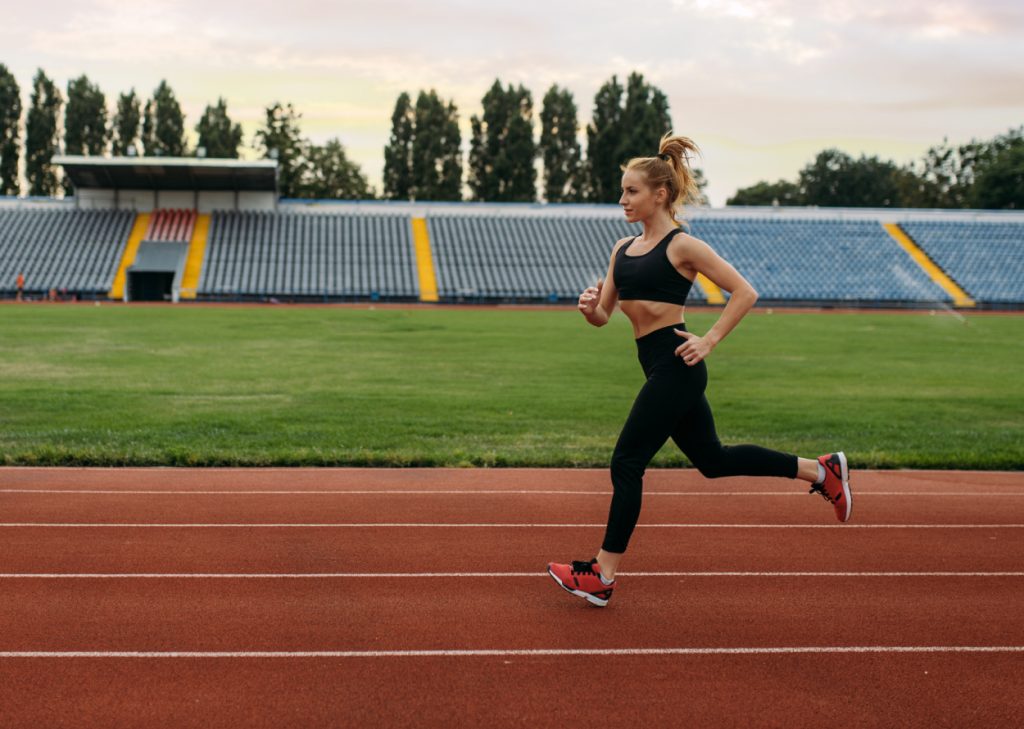
- Running mechanics. Most athletes run the way they’ve always run. A trained eye catches the inefficiencies — hip drop, overstriding, poor arm drive — that are quietly costing them speed and [increasing injury risk](internal link: safe return-to-play protocols). Fixing these mechanics alone can shave meaningful time off a 40-yard dash.
- Functional strength development. This isn’t about how much weight you can move on a bench press. It’s about building full-body strength that translates to explosive, sport-specific power. Athletes at WSP have gone from lifting under 200 lbs on the trap bar to well into the 300s — in a matter of months — with proper coaching and progressive loading.
- Movement screening. Before an athlete ever touches a barbell for max effort, our coaches analyze how they move. Identifying compensations early is one of the most effective ways to reduce the chance of injury before it happens.
Why Sussex County Athletes Need This Now
The athletic landscape in Sussex County has quietly shifted. High school programs in Sparta, Franklin, and surrounding towns are more competitive than they were a decade ago. The athletes coming out of club programs are bigger, faster, and more specialized. Recruiters are noticing.
That means the bar for “college-ready” has moved — and the training has to move with it.
The athletes who are getting recruited aren’t just talented. They’re prepared. They show up to camps and combine with measurable data behind them: documented speed improvements, strength benchmarks, and the kind of movement quality that coaches at the collegiate level can spot immediately.
That preparation doesn’t happen by accident. It’s built, systematically, over months of precision work.
What the Path to College-Level Readiness Actually Looks Like
Here’s the honest progression for a high school athlete serious about playing at the next level:
- Get evaluated. Establish your baseline — speed, strength, agility, and movement quality. You can’t improve what you haven’t measured.
- Address your mechanics. [Optimizing running mechanics for athletes](internal link: running mechanics) is often the fastest route to measurable performance gains. Small fixes, big returns.
- Build sport-specific strength. Progressive, coached strength development — not random lifting — that mirrors the physical demands of your sport and position.
- Train in-season AND out-of-season. College coaches recruit year-round. Your athlete’s development shouldn’t stop when the season ends.
- Track, test, and repeat. Every few months, re-test the benchmarks. The data tells the story recruiters want to see.
The Local Proof Is Right Here
Athletes who’ve trained at WSP have gone on to compete at every level of collegiate athletics — from D3 programs to D1 rosters, and even to national teams representing the U.S., Canada, and Portugal. These aren’t distant success stories. They’re kids from Sussex County who started exactly where your athlete is right now.
One athlete put it simply: “WSP helped shape me into the athlete I am today.” Another noted the program “prepared me for the college level” — not just physically, but with the confidence to compete when it mattered most.
That confidence isn’t a soft benefit. It shows up in tryouts, in camps, and in the moments when the pressure is highest.
This Is What “Train Like an Athlete” Really Means
There’s a reason WSP’s motto is “Let Success Be Your Noise.” It’s not about talking about potential — it’s about building it, quietly and methodically, until the results speak for themselves.
If your athlete is putting in the hours but you’re not sure the training is moving the needle, that’s worth paying attention to. The difference between a good program and a precision one isn’t always visible in the moment. It shows up in the spring, at the combine, on the roster.
Conclusion / Next Steps
Sussex County athletes have every advantage they need to compete at the college level — the talent is here, the drive is here. What makes the difference is how they train, not just how much.
If you’re ready to stop guessing and start building a real plan, the first step is simple: Get Evaluated. A WSP Performance Evaluation gives your athlete a clear picture of where they are, what’s holding them back, and exactly what it takes to get to the next level.
📞 Call us at (973) 358-8986 or schedule your evaluation online. Let’s find out what your athlete is really capable of.
Get Evaluated Now & Start Your Journey →
Frequently Asked Questions
What is the difference between sports performance training and a regular gym?
A regular gym gives you equipment. Sports performance training gives you a system. At WSP, every session is built around measurable athletic outcomes — speed, strength, agility, and movement quality — with certified coaches who design and adjust your program based on real performance data. It’s the difference between exercising and training with a purpose.
At what age should a youth athlete start strength training?
Age-appropriate strength training can begin as early as 6–9 years old when it’s properly coached and focused on movement fundamentals rather than heavy loading. At WSP, programs like Fast Track (ages 6–9) and the Middle School program (ages 10–13) are specifically designed for each developmental stage, prioritizing form, confidence, and injury prevention first.
How can a high school athlete improve their 40-yard dash time?
The fastest gains in 40-yard dash time usually come from fixing running mechanics — not just running more. Our coaches analyze each athlete’s stride, arm drive, hip position, and acceleration mechanics, then build a targeted program to correct inefficiencies. Combined with sport-specific strength work, most athletes see measurable improvement within a few months of consistent training.
 Why Most Youth Athletes Peak Too Early (And How to Fix It)